
Projects
In this lab, we engage in numerous large-scale projects and conduct joint research with various companies.

Research on Animal Behavior Technology Leading to Resolution of Conflicts between Wildlife and Humans
This project seeks to understand the mechanisms underlying behavioral changes in animals and to establish technological foundations for appropriate interventions. Through this approach, we aim to enhance animal welfare and promote harmonious coexistence between humans and animals.
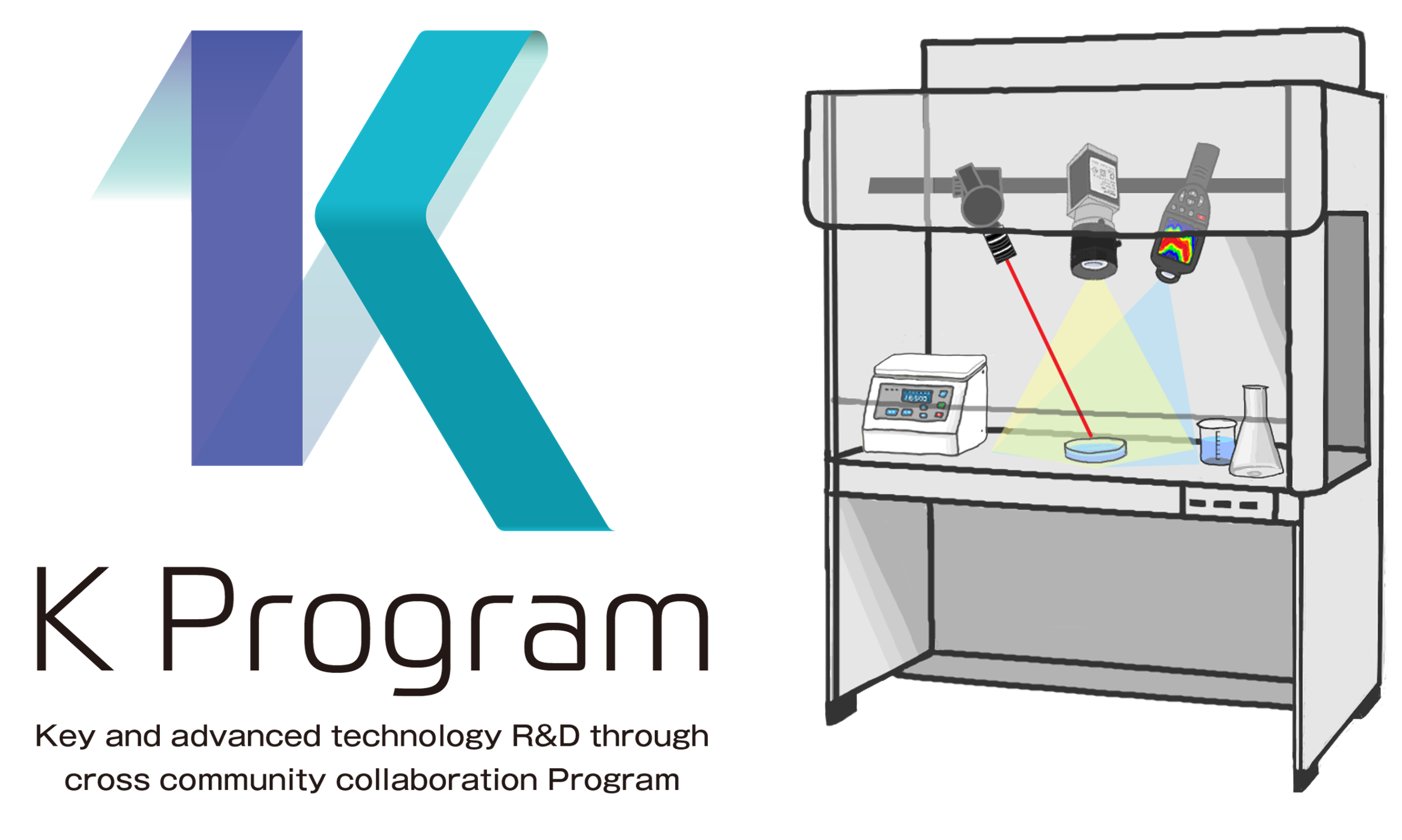
Extraction and Utilization of Tacit Knowledge through Hybrid Intelligence for Enabling Bio-Experiments Exceeding Expert Levels
This project captures the tacit “artisan skills” of expert workers as sensor data and analyzes and models them to enable skill transfer, task assistance, and automation. Demonstration studies are conducted primarily in the life sciences domain.

Elucidation of Super-Sensory Integration Mechanisms Acquired by Long-Distance Navigation Animals (Co-investigator)
This project investigates super-sensory integration mechanisms acquired through evolution by leveraging in vivo and ex vivo measurement technologies and movement data analysis methods. By studying diverse long-distance navigating species—including birds and fish—we aim to uncover sensory integration mechanisms that extend beyond the conventional five senses. The research integrates neuroscience, ecology, and data science in a cross-species framework. In addition, interventional experiments using laboratory animals such as mice are conducted to achieve a comprehensive understanding of super-sensory integration mechanisms.
Hierarchical Bio-navigation: Fusion of Cyber and Physical Spaces
This project aims to elucidate the hierarchical mechanisms by which living organisms process environmental information and navigate toward their destinations. The insights gained are translated into engineering control systems and novel navigation technologies.
Mathematical Analysis of Wall Micro-motion Based on 4D-CTA/4D-MRA Medical Images and AI Technology Integration: Mathematical Data Science Integrated Simulation for Preemptive Medicine (Co-investigator)
Cerebral aneurysms are high-risk conditions with a mortality rate exceeding approximately 50% upon rupture. While direct visualization through highly invasive open-skull surgery has traditionally been used, minimally invasive imaging techniques such as CT and MRI have recently been established. In this study, we develop a technology to estimate aneurysm wall characteristics by leveraging medical imaging data acquired through these modalities and applying integrated mathematical modeling and AI-driven analysis. Furthermore, we validate the effectiveness of the proposed approach across multiple clinical cases and aim to automate the protocol for real-world clinical deployment.